Leadership used to be described mostly in terms of authority, decisiveness, and strategic vision. Those still matter, but they are not enough. The leaders who build trust fastest are usually the ones who manage their emotions well, read people accurately, and stay constructive under pressure. That is why emotional intelligence leadership has become one of the most important differentiators in modern teams.
If you want to improve EQ for leaders, the goal is not to become softer or vague. The goal is to become more precise with yourself and more effective with other people. Emotional intelligence helps you regulate your reactions, communicate with more impact, navigate tension, and create an environment where people can do their best work. The good news is that these skills can be trained deliberately.
Key takeaways
- Emotional intelligence leadership improves trust, judgment, and team performance.
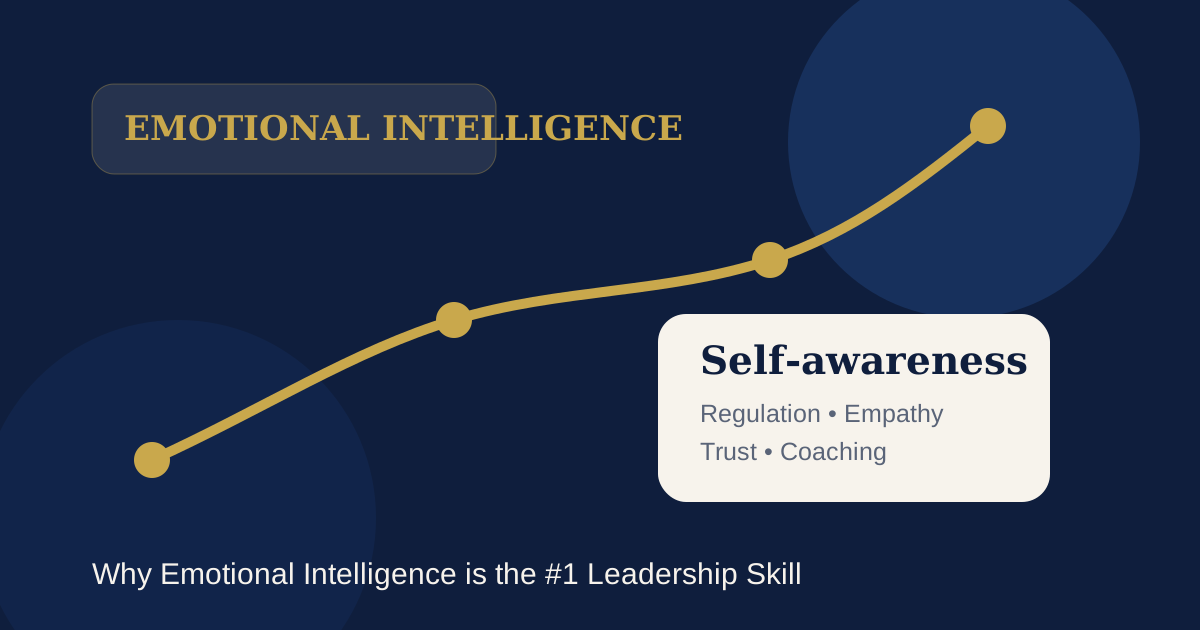
- Self-awareness and emotional regulation come before empathy and influence.
- Great leaders read emotional signals without becoming controlled by them.
- EQ grows through reflection, feedback, and repeated practice in real situations.
Why emotional intelligence changes leadership results
The value of EQ is not theoretical. It shows up in the quality of your relationships, decisions, and culture.
People trust emotional stability
A leader can be technically brilliant and still lose influence if people experience them as reactive, defensive, or unpredictable. Emotional intelligence leadership matters because people watch how you behave when things go wrong. If your energy creates calm instead of confusion, you become easier to trust.
That trust has practical consequences. Teams share problems earlier, conflicts are resolved faster, and feedback is more likely to be heard. In other words, EQ for leaders does not replace execution. It removes the emotional friction that slows execution down.
Leadership is emotional whether you plan for it or not
Every meeting carries an emotional layer. Motivation, frustration, fear, ego, uncertainty, and ambition are all present even when the conversation looks purely rational. Leaders who ignore that layer usually misread what is happening in the room.
Emotional intelligence leadership means noticing those signals without becoming dramatic about them. You learn to ask better questions, sense resistance earlier, and respond in a way that keeps people engaged instead of shutting them down.
Start with self-awareness and emotional regulation
You cannot lead other people well if you do not understand your own patterns first.
Notice your triggers before they run the meeting
Every leader has emotional triggers: missed deadlines, vague communication, criticism, low standards, or loss of control. The issue is not having triggers. The issue is acting from them automatically. EQ for leaders starts with recognizing what reliably changes your tone, posture, or speed of reaction.
A simple habit helps: after difficult conversations, write down what happened, what you felt, and what story you told yourself in the moment. Over time, you will see repeated patterns. That awareness gives you the pause needed to choose a better response.
- Identify the situations that trigger frustration, defensiveness, or impatience.
- Pause before replying when emotion rises fast.
- Review one difficult conversation at the end of each day.
Regulation is not suppression
Many people confuse emotional control with emotional numbness. Strong emotional intelligence leadership does not mean pretending everything is fine. It means feeling the emotion, naming it accurately, and responding with intention instead of impulse.
Sometimes that means slowing the conversation down. Sometimes it means saying, 'I need ten minutes before I answer well.' Leaders who can regulate themselves this way make better decisions and create psychological safety for everyone else.
Use empathy to improve communication, not to avoid honesty
Empathy becomes powerful when it helps you deliver clearer messages and understand what others need to perform.
Read what is underneath the words
When someone sounds resistant, the problem is not always attitude. It may be uncertainty, lack of clarity, fear of failure, or frustration from a previous decision. Emotional intelligence leadership helps you separate the visible behavior from the underlying concern.
That changes the conversation. Instead of pushing harder immediately, you can ask, 'What feels unclear here?' or 'What risk are you seeing that I may be missing?' Those questions create alignment faster than blunt authority alone.
Pair empathy with directness
Empathy without standards becomes avoidance. Leaders with strong EQ are not vague. They simply deliver hard messages in a way that preserves dignity and forward movement. They can say, 'This missed the mark, and here is what needs to change,' without shaming the person.
That combination is what makes EQ for leaders so valuable. You are not choosing between kindness and performance. You are increasing the chance that people hear the truth, improve quickly, and stay committed to the team.
How to build emotional intelligence leadership in daily practice
EQ develops through repetition in ordinary moments, not only during major crises.
Build a weekly feedback loop
Ask one trusted colleague or direct report a simple question every week: 'What is one thing I do that helps, and one thing I do that creates friction?' This is one of the fastest ways to improve emotional intelligence leadership because it reveals blind spots you cannot see alone.
The key is to listen without defending yourself. If you explain every comment away, feedback stops being useful. If you absorb it calmly and act on one point, people start experiencing your growth in real time.
Practice micro-habits in real situations
Choose two habits for the next 30 days: pause before responding to tension, summarize the other person's perspective before giving your own, or ask one coaching question instead of giving an immediate answer. Small habits make EQ for leaders trainable instead of abstract.
Emotional intelligence becomes a real leadership skill when other people can feel the difference. They leave conversations clearer, calmer, and more accountable. That is the standard to aim for.
Frequently asked questions
Why is emotional intelligence considered a top leadership skill?
Because it improves trust, communication, conflict management, and decision-making under pressure. Leaders with strong EQ often create better performance because people can work with them more openly and effectively.
Can EQ for leaders really be trained?
Yes. Self-awareness, regulation, empathy, listening, and feedback habits all improve with deliberate practice. The fastest progress usually comes from reflection after real conversations and consistent feedback from other people.
What is the fastest way to improve emotional intelligence leadership?
Start by identifying your emotional triggers, pausing before reactive responses, and asking for one piece of weekly feedback. Those habits create immediate gains in awareness and control.
Turn EQ into visible leadership
Turn insight into a practical system.
The Leadership Mastery Program helps you strengthen self-awareness, communication, resilience, and influence with a practical framework you can apply immediately.
Explore the Leadership Mastery Program — $49.90